
Radiologist Expert Witnesses for Personal Injury Cases
The defense reads your client's MRI and says it shows nothing significant. A radiologist expert witness can tell a completely different story — one grounded in the imaging itself.
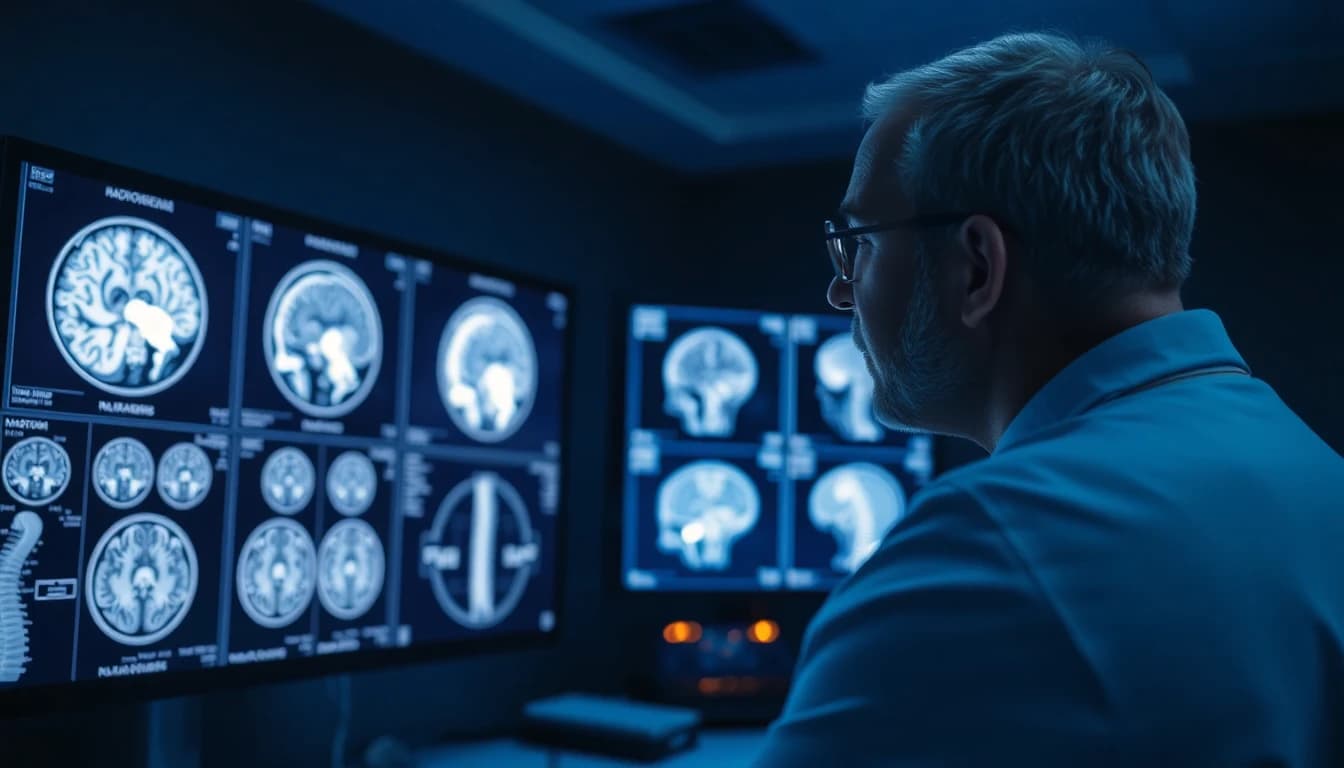
Radiologist expert witnesses provide professional interpretations of medical imaging — MRI, CT scans, X-rays, and other studies — in the context of personal injury litigation. Their role is critical when defense radiologists or treating physicians have offered competing readings of the same imaging studies. An independent radiologist can establish disc herniations, ligament tears, neural impingement, and other findings that correlate directly with the mechanism of injury and the plaintiff's reported symptoms. PI Expert Network works with board-certified radiologists who have subspecialty fellowship training and active practices in the relevant imaging modality.
What is a radiologist expert witness?
A radiologist expert witness is a board-certified physician specializing in diagnostic imaging who reviews and interprets medical imaging studies — MRI, CT, X-ray, ultrasound, nuclear medicine — and provides professional opinions on their findings in a legal proceeding. In personal injury cases, they are most frequently retained to provide an authoritative second reading of imaging studies that are central to the causation or injury severity dispute. Their opinions can establish the presence, location, and clinical significance of injuries visible on imaging, and can rebut defense interpretations that minimize or dismiss positive findings.
When do you need a radiologist expert witness?
Disputed MRI or CT interpretation
When a treating radiologist, defense IME physician, or defense radiology expert reads the same imaging differently, an independent radiologist expert can provide a thorough, documented re-read with clinical correlation to the injury mechanism.
Pre-existing condition disputes
Defense teams often claim MRI findings are degenerative and pre-existing rather than traumatically caused. A radiologist expert can analyze imaging characteristics — disc morphology, signal intensity, endplate changes — to opine on whether findings are consistent with acute trauma versus chronic degeneration.
Soft tissue injury documentation
Soft tissue injuries that are clinically significant may be subtle on imaging and require expert interpretation to document fully. A subspecialty radiologist — musculoskeletal or neuroradiology — can identify findings that a general radiologist or non-radiologist physician might miss.
Traumatic brain injury imaging review
Standard MRI may miss diffuse axonal injury and other TBI sequelae visible only on advanced sequences (DTI, SWI, fMRI). A neuroradiology expert can opine on whether advanced imaging supports the TBI diagnosis and what the imaging findings mean clinically.
What to look for in a radiologist expert witness
Board certification and fellowship subspecialty
General radiology board certification is a baseline. For spine and orthopedic cases, seek a musculoskeletal radiology fellowship. For brain injury cases, seek a neuroradiology fellowship. Subspecialty training dramatically strengthens the expert's authority on complex imaging findings.
Active clinical practice reading volume
A radiologist who reads hundreds of studies per week maintains sharper pattern recognition than one who has transitioned to primarily medicolegal work. Ask about their current clinical reading volume and the mix of studies they interpret.
Experience with the specific imaging modality
MRI interpretation is a distinct skill from CT or ultrasound interpretation. Match the expert's primary modality experience to the imaging central to your case.
Ability to present findings visually
Radiology testimony lives or dies on demonstrative exhibits. The best radiologist experts can annotate images for the jury, explaining findings in plain language while pointing to the specific anatomical structures at issue.
How PI Expert Network finds your radiologist expert
You submit your case
Tell us the case type, jurisdiction, and what you need from the radiologist expert. Takes 2 minutes. No login, no cost.
We hand-match
Our team personally reviews your case and selects 2–3 vetted radiologist experts whose credentials, experience, and geographic availability fit your specific facts.
You review and connect
You receive a private shortlist with full credentials, CV, and fee schedule. Choose your expert and we make the direct introduction. No middlemen after that.
About PI Expert Network
PI Expert Network is a concierge expert witness matching service for personal injury attorneys. We are based in Phoenix, AZ and operate exclusively in the personal injury space. Every expert in our network has been personally interviewed by our founder, credentials-verified, and approved before receiving any case referral. We do not run a directory — we hand-match every single case. Our service is free for attorneys. Contact us at charlie@piexpertnetwork.com or (480) 697-2727.
Frequently asked questions
Can a radiologist expert witness establish that an injury is causally related to an accident?
A radiologist can establish that imaging findings are consistent with acute traumatic injury rather than chronic degeneration — addressing the timing and mechanism question. However, the causal link between the accident and the imaging findings is typically addressed jointly with a treating or reviewing physician who provides clinical correlation. The radiologist establishes what the imaging shows; the physician connects it to the accident.
What is the difference between a treating radiologist and a radiologist expert witness?
A treating radiologist interpreted the images at the time of care and may testify about that interpretation. A retained radiologist expert independently reviews all relevant imaging and provides an opinion specifically tailored to the legal issues in the case. The expert review is often more thorough and more focused on forensic questions than the original clinical read.
Can a defense radiologist get my client's MRI re-read?
Yes — both sides can retain radiologists to review imaging. Defense teams frequently use radiologists to argue that findings are degenerative, minimal, or unrelated to the accident. This is precisely why plaintiff-side radiology expertise matters: an authoritative, well-documented counter-read from a credentialed subspecialist can neutralize the defense interpretation.
What advanced MRI sequences are relevant to TBI cases?
Standard 1.5T or 3T MRI sequences may appear normal in mild TBI. Advanced sequences that may reveal injury include: Diffusion Tensor Imaging (DTI) for white matter tract integrity, Susceptibility-Weighted Imaging (SWI) for microhemorrhages, and functional MRI (fMRI) for cortical activity patterns. A neuroradiology expert can opine on whether these sequences were performed and what they show.
How much does a radiologist expert witness cost?
Radiologist expert witness fees typically range from $500 to $1,500 per hour, reflecting the physician-level training and the time required for thorough imaging review and report preparation. Subspecialty radiologists (neuroradiology, musculoskeletal) command premium rates. PI Expert Network provides full fee schedules before you engage.
Experts commonly retained alongside a radiologist
When your case turns on causation, standard of care, or future medical needs, the right physician expert witness can make or break your outcome.
When the defense argues the forces weren't enough to cause your client's injuries, a biomechanical engineer provides the physics-based rebuttal.
Traumatic brain injury, cognitive deficits, and psychological sequelae are invisible injuries. A neuropsychologist makes them measurable, documented, and impossible to dismiss.
Find your radiologist expert witness today.
Free for attorneys. Vetted and delivered quickly. No commitment required.